
About
Two decades building systems in contexts where wrong decisions are expensive.
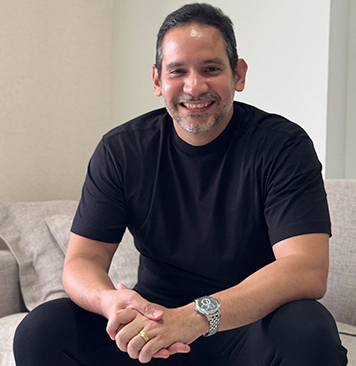
Hi, I'm Manoel Medeiros
Over more than 20 years, I have followed the evolution of software engineering from monoliths and waterfall systems, through traditional processes like RUP, to modern microservices and highly available distributed systems. I have designed greenfield systems, led cloud migrations, modernized critical legacy systems, and participated in complex startup projects including storage mesh virtualization and global platform expansion.
Throughout my career, I have developed people and teams to work collaboratively and autonomously, applying XP agile practices and fostering a culture of trust and continuous learning. I have worked in globally distributed teams, facing challenges of scalability, resilience, and large-scale operations, always seeking technical decisions that increase predictability, reduce risk, and amplify team impact.
My approach combines long-term vision with attention to operational detail, structuring systems and processes that evolve sustainably. Every architectural choice is guided by solid principles, concrete metrics, and carefully evaluated trade-offs, ensuring that systems and teams grow reliably even under pressure.
This site is where I share hard-won lessons, patterns and principles that guide my decisions today, with the goal of creating lasting impact on critical products and user experiences at scale.
Engineering Philosophy
How I think, how I structure, and how I execute: from perception to impact multiplication.
Fundamentals as a lens
Mastery of fundamentals is having internalized mental models that change what you see when looking at a system. SOLID, GRASP, DDD, and Design Patterns are thinking tools. Those who master them perceive structural fragilities, anticipate breaking points, and distinguish essential from accidental complexity. Fundamentals define the difference between reacting to symptoms and diagnosing causes.
View practices
- Look at a system and perceive whether design decisions reflect what was modeled
- Distinguish essential from accidental complexity before proposing solutions
- Diagnose structural causes down to the root
- Recognize when an abstraction communicates intent and when it merely hides implementation
- Know when a principle is being applied with purpose and when it has become dogma
Decision as commitment
Every architecture is a bet on what will change and what will not. Designing is consciously choosing where to accept coupling, where to protect flexibility, and what to deliberately ignore. Trade-offs are explicit, documented, and revisable. Security, cost, compliance, and team capacity enter the equation from the start. Modeling well means reducing the space of future decisions without eliminating the ones that matter.
View practices
- Document the rationale behind structural decisions, including context and evaluated alternatives
- Evaluate trade-offs of cost, risk, security, and evolution before committing architecture
- Model threats and constraints as an integrated part of design
- Delimit system boundaries before designing internal components
- Validate technical hypotheses with prototypes before committing the team
Code as expression
Code is the most precise expression of a design decision. Each line communicates intent to whoever will maintain it, including yourself months later. Clarity in naming reveals domain understanding. Consistency in conventions reduces cognitive load. Well-delimited responsibilities enable localized change. Simplicity in code is the result of depth in thinking.
View practices
- Name by domain intent, revealing the purpose of each element
- Write code that dispenses with explanatory comments
- Refactor for clarity whenever reading requires effort
- Treat readability as a measurable quality attribute
- Maintain style consistency as a collective team contract
Delivery discipline
Software only generates value in production. Quality is a continuous property that permeates from modeling to operations. Tests sustain change as much as they verify correctness. The automated pipeline validates every delivery. Deploy happens as a natural consequence of disciplined integration. Observability closes the feedback loop between decision and consequence. Every change in production is a hypothesis being validated.
View practices
- Use TDD as a design and discovery tool
- Cover in layers: unit for logic, integration for contracts, e2e for critical flows
- Keep the golden source as a faithful mirror of production, where each integration brings intent closer to reality
- Automate the path from code to production, validating each stage before advancing
- Govern change exposure with feature toggles, decoupling the deploy cycle from the release cycle
- Design each delivery with planned reversibility, where rollback is evidence of process maturity
- Observe real behavior in production with metrics, logs, and tracing
Leadership as multiplication
Team architecture precedes software architecture. Technical leadership is developing people while solving engineering problems: coaching that accelerates growth, communication that translates complexity, a culture where feedback is continuous and failures are learning. High-performance teams are born from clarity of purpose, psychological safety, and leaders who remove obstacles. Leading is multiplying the team's capacity for decision and execution. The team's result is always the responsibility of whoever leads.
View practices
- Build team identity through shared mental models, where the collective thinks and operates as a unit
- Expand technical repertoire deliberately, making continuous learning part of the team's routine
- Ask questions that develop critical thinking and decision-making capacity in the team
- Translate technical decisions into business impact for different audiences
- Create a blameless culture where mistakes accelerate the team's evolution
- Balance immediate delivery with people development
- Strengthen autonomy and responsibility as expressions of the team, where individual excellence is amplified by the collective
Want to apply this model in your context?
Whether to raise your team's technical level, structure architecture with clarity, or accelerate your evolution as an engineer, we can discuss how to adapt these practices to your reality.
Start conversation